The situation
Today, everything has to move much faster, and there is often no longer the time or budget for endless physical test driving. Through simulation, combined with targeted test infrastructure, you can mimic the behaviour of a car part without the vehicle ever actually hitting the road. That means working faster, more thoroughly, and more cheaply, and it matters to everyone who ever gets into a car: the more thorough that testing is upfront, the safer and more reliable tomorrow’s car will be. KU Leuven, with the research group LMSD (Laboratory for Mechatronics and System Dynamics), and Toyota Motor Europe are looking for exactly that answer.




What does this mean for you?
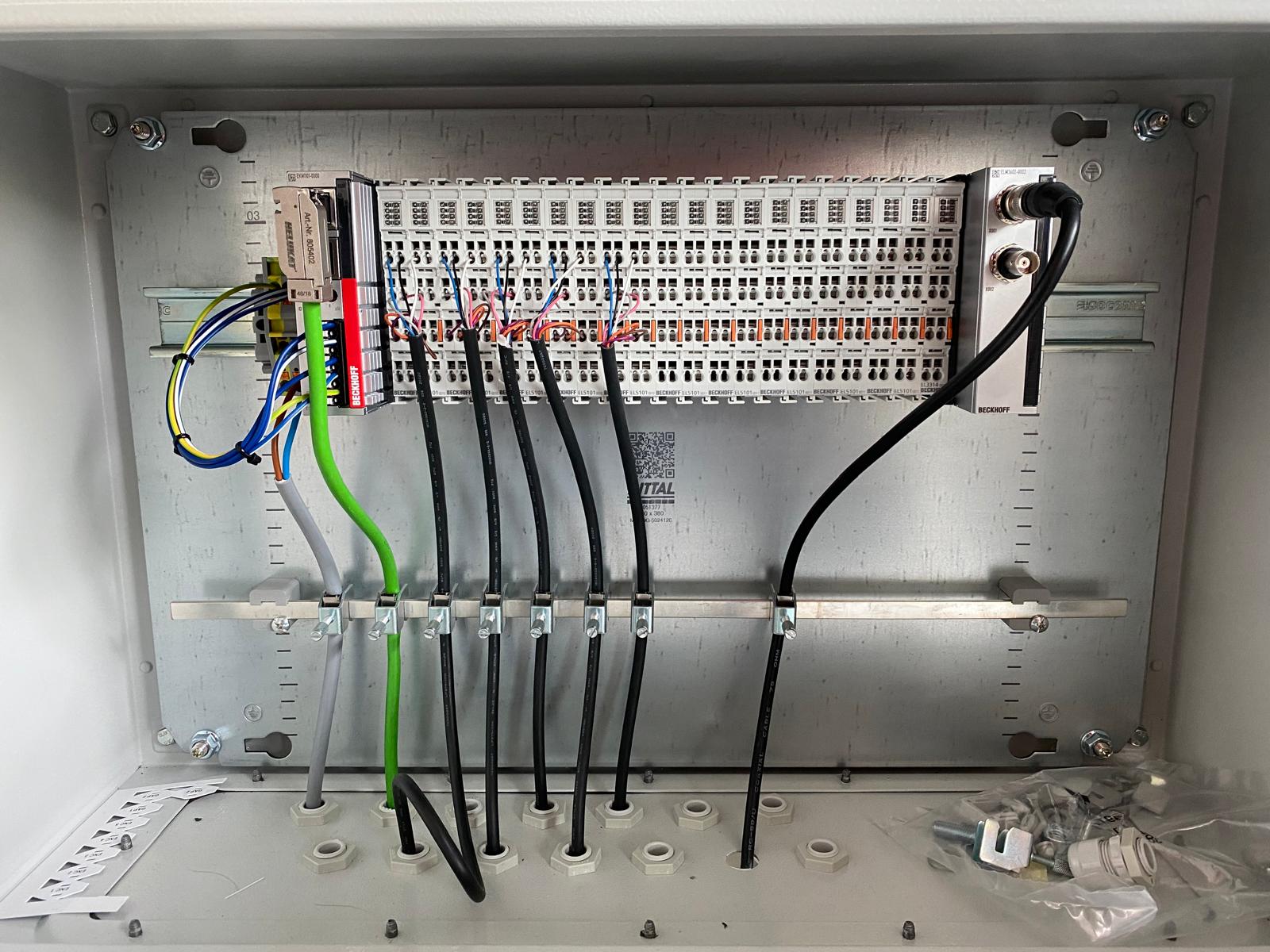
Are you facing a similar challenge: testing new technology against extreme precision requirements, without an unaffordable number of physical test drives? CTRL engineering develops custom-built test benches that connect to existing research infrastructure, so simulation models can be validated faster and with less physical test work.
The challenge
They study the NVH behaviour (noise, vibration & harshness) of vehicle components, and want to be able to trust their simulation models of that behaviour. That requires measurements of extreme precision: accurate to within 0.1 arcsecond, at speeds up to 3000 rpm. At that scale, every source of interference is a risk: electrical noise, processing delay, or a sensor that samples too slowly can make the difference between a usable and an unusable measurement result.
Our approach
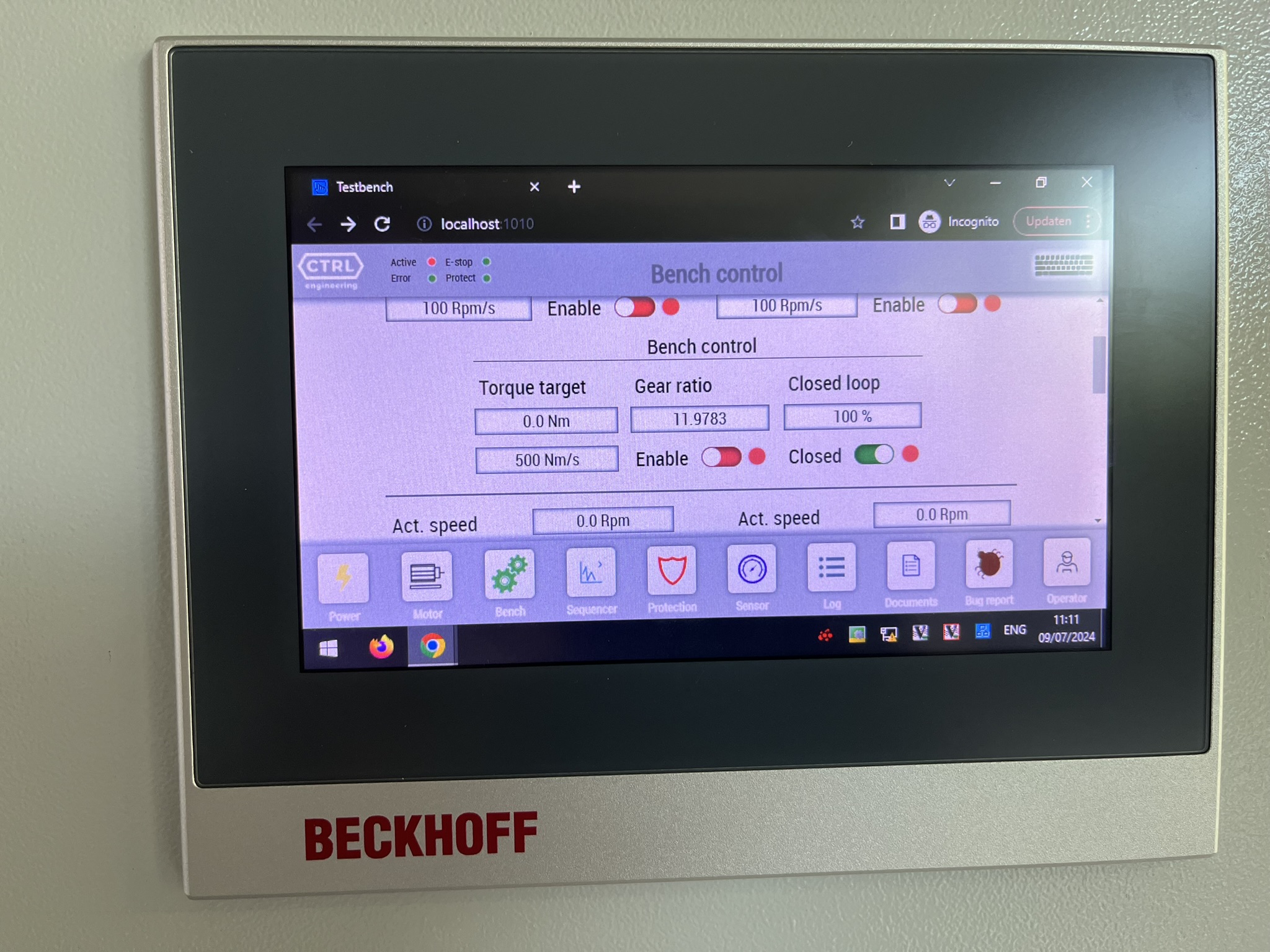
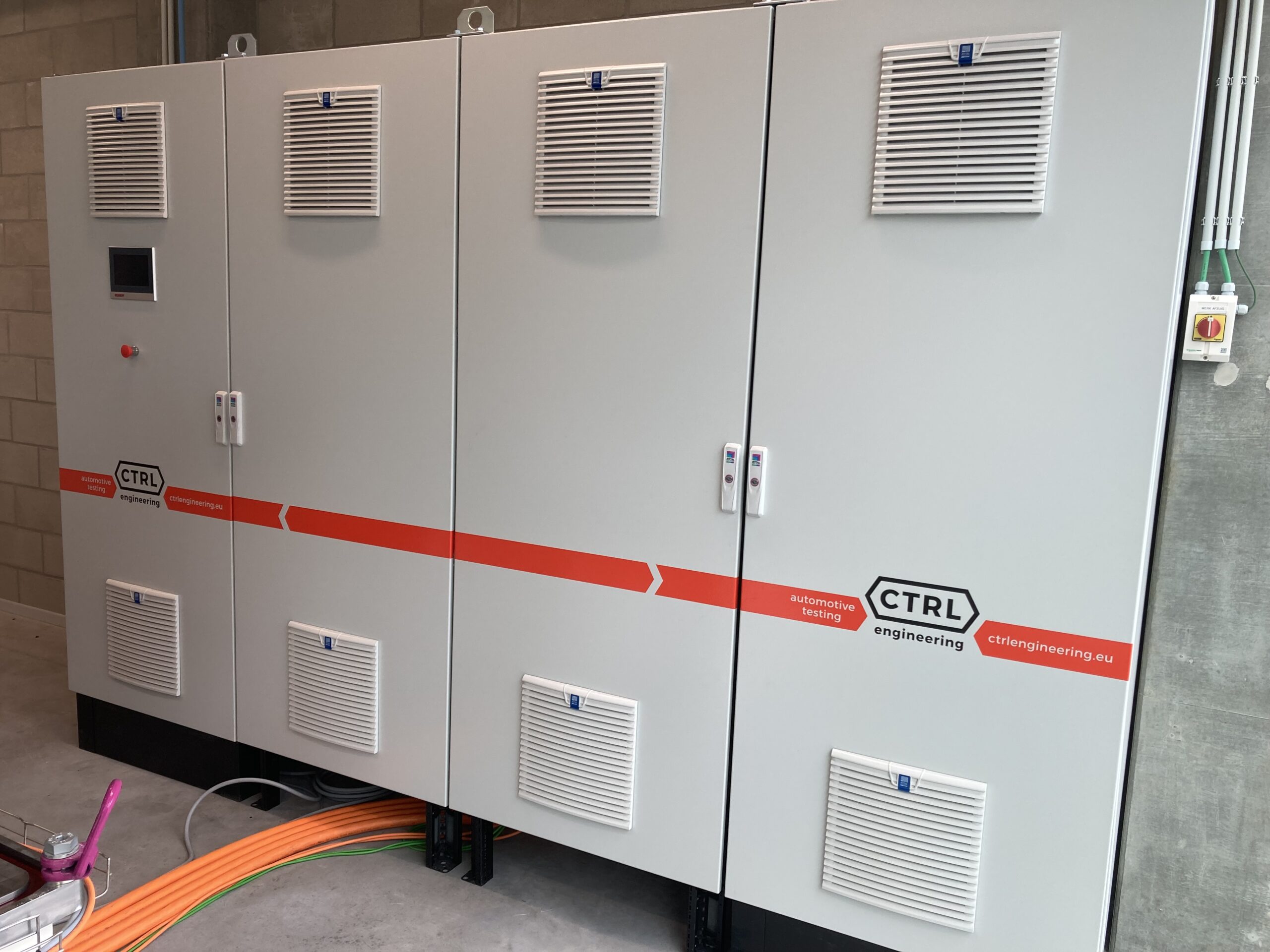
CTRL engineering built a custom-built test bench with a simple interface, so researchers can set up and run their own experiments. CTRL was responsible for the entire process: the mechanical and electrical design, the software and data acquisition systems, right down to a custom device for fast, high-precision measurements. The test bench comfortably exceeds the required precision, and does so with far less energy consumption than a classic setup: energy released during braking is partly recovered. It also communicates in real time with the laboratory’s existing research infrastructure, so it connects seamlessly with what was already there.
“CTRL engineering helped us from accurate requirement setting up to the delivery of a high accuracy test bench, which made us a very happy partner.”
The result
Researchers now have a measurement instrument that comfortably outperforms their original precision requirement. Simulation models of new powertrain components can be validated faster, with far less physical test work: a step closer to tomorrow’s powertrain, and an example of how simulation and measurement technology strengthen each other rather than replace one another.

AUTOMOTIVE

Off-Highway Tier 1Virtual Validation for Off-Road Transmission Systems
Read This Success StoryAUTOMOTIVE

Auto OEMHow Co-Simulation and Design Exploration Streamline Hybrid Control Development
Read This Success StoryAUTOMOTIVE

KU Leuven LMSDPushing the Limits of Measurement Precision in Drivetrain Research
Read This Success StoryAUTOMOTIVE

Auto Tier1Test Anywhere: Simulation at the Heart of Mobile Testbench Design
Read This Success Story
AUTOMOTIVE

TRAXIALManufacturer of electric motors Automated test bench for their motors
Read This Success StoryPRODUCTION TECHNOLOGY
Delto PullHow do you unload a truck without ever tipping it?
Read This Success StoryPRODUCTION TECHNOLOGY

AllwavesManufacturer of wave pools A wave pool that creates ocean-quality surf waves
Read This Success Story