Simulation engineering
Before a single part is manufactured, we can know how your machine will perform. Using advanced simulation technology, we build a virtual replica of your machine or system and test it under real-world conditions — analyzing stress, heat, fluid dynamics, and control behavior all in one integrated environment. This means design weaknesses are caught early, not on the factory floor.
We create high-fidelity digital twins that combine mechanical, thermal, electrical, and fluid dynamics into one model. This lets us predict and optimize system behavior before any physical prototype exists.
Through Finite Element Analysis (FEA) and Computational Fluid Dynamics (CFD), we assess how components handle mechanical load, deformation, and heat. Like this, we refine designs for durability and compliance with industry standards.
With virtual commissioning and Hardware-in-the-Loop (HIL) testing, we validate your control software and PLC logic in a simulated environment. This means software development and testing can start before the physical machine is even built, dramatically cutting commissioning time and reducing integration risk.
Finally, we use parametric design optimization to systematically compare design variants, balancing cost, performance, and sustainability. Automated iteration cycles speed up development and reduce material waste.

Software engineering
We develop custom software that connects hardware to human intent, handling real-time control, data processing, and operator interaction in one coherent system. From low-level embedded code to cloud-connected dashboards, we build software that makes complex machines reliable, transparent, and easy to operate.
For industrial programming, we write high-performance embedded and PLC code across platforms like Beckhoff and Lenze. This also includes motion control, machine vision, and fieldbus communication. Safety-critical or high-speed applications are our home ground.
Using model-based development in Simulink and Stateflow, we design advanced control algorithms and state machines that can be directly deployed to embedded controllers. This approach reduces hand-coding, improves accuracy, and makes control logic easier to maintain and adapt over time.
Our HMI development turns complex machine data into clear, actionable operator screens. Built on platforms like Beckhoff TwinCAT HMI, these interfaces feature real-time visualization, touchscreen interaction, and built-in diagnostics — reducing operator errors and keeping lines running smoothly.

Mechanical engineering
We take ideas from first sketch to production-ready hardware, developing robust mechanical systems built for the demands of industrial environments. Structural integrity, material choice, and seamless integration with electrical and software systems are built into our process from day one, not added as an afterthought.
In the concept phase, we work directly with clients to translate requirements and ambitions into tangible design directions. That means brainstorming, technology scouting, and market research. This ensures the solution is not just technically sound, but commercially relevant.
From there, our engineers develop detailed 3D models and production-ready technical drawings. Every design decision accounts for functionality, manufacturability, tolerances, and long-term durability. Before committing to full production, we validate designs through 3D-printed prototypes tested under real operating conditions. This iterative loop catches issues early, allows refinement at low cost, and gives clients confidence in what they're scaling up.
Once designs are approved, we stay involved through manufacturing support by covering process planning, tooling design, and quality control. We bridge the gap between engineering and production, ensuring what gets built matches what was designed, and integrates cleanly on-site.

Electronics engineering
We design custom electronic hardware that connects the physical and digital worlds, linking sensors, controllers, and actuators into systems that are fast, reliable, and built for the realities of industrial environments. From a single sensor interface to a complete embedded platform, we develop electronics that perform where it counts.
We design industrial-grade PCBs for high-speed, high-power, and safety-critical applications engineered to withstand temperature extremes, vibration, and electromagnetic interference. Compliance with CE, UL, and other relevant standards is part of the design process, not a box to tick at the end.
Accurate data starts with proper signal handling. We develop custom sensor interfaces and signal conditioning circuits that capture clean, reliable measurements even in electrically noisy environments, paired with real-time processing algorithms where precision matters most.
Throughout the process, we apply design-for-manufacturing principles to ensure that what works in the lab can be produced efficiently and cost-effectively at scale. Component selection accounts for long-term availability, and we support prototyping, validation, and manufacturing coordination all the way through.

Computer vision engineering
We develop AI-driven vision systems that give machines the ability to inspect, measure, and respond to what they observe in real time. From detecting microscopic defects to guiding robotic motion, our vision solutions bring a new level of intelligence and reliability to manufacturing and quality control processes.
Every system starts with the right hardware foundation. We select and configure cameras, lenses, and lighting setups tailored to each application, whether that requires area scan, line scan, or hyperspectral imaging. Lighting design using LED, laser, or structured light techniques ensures consistent image quality even in challenging industrial conditions.
On top of that hardware, we develop image processing algorithms ranging from classical rule-based methods to advanced deep learning models. Edge detection, contour analysis, and AI-based object classification give our systems the flexibility to handle both straightforward inspection tasks and highly complex recognition challenges, always optimized for speed and accuracy.
For quality control, our systems enable dimensional measurement at micrometer precision without physical contact, automated defect detection, and repeatable classification across high-volume production runs. Human error is reduced, and quality assurance becomes a continuous, data-driven process.
Integration into the broader machine architecture is where it all comes together. We connect vision systems directly to PLCs and motion controllers, enabling real-time feedback loops that allow machines to dynamically adjust their behavior based on what they see. The result is a vision solution that does not just inspect, but actively improves your process.

Electrical engineering
We design and develop custom electrical systems that power, control, and protect industrial machinery from the ground up. From initial schematics to on-site installation, we take responsibility for the full electrical scope, ensuring every system is reliable, efficient, and built to last.
Our electrical design process starts with clear, structured schematics covering power distribution, signal integrity, and system scalability. We design with future-proofing in mind, so upgrades and expansions can be accommodated without redesigning from scratch.
For drive systems and motion control, we develop advanced solutions using control methods like Field-Oriented Control and Direct Torque Control, delivering precise torque, speed, and position management. Optimized DC bus architectures further improve energy efficiency and dynamic response across the full operating range.
Safety and compliance are not afterthoughts. We integrate functional safety principles, EMC mitigation, and protection against overcurrent and short-circuit conditions into every design, meeting IEC and CE standards as a baseline, not a target.
When designs are finalized, our team handles panel assembly, wiring, and field integration directly. We work in close coordination with mechanical and software engineers to ensure all systems come together as one, reducing commissioning time and making long-term maintenance straightforward.
Whether the application is industrial automation, a specialized test bench, or custom machinery, we deliver electrical engineering that gives your machine the power and precision it needs to perform.

Our customer cases
PRODUCTION TECHNOLOGY
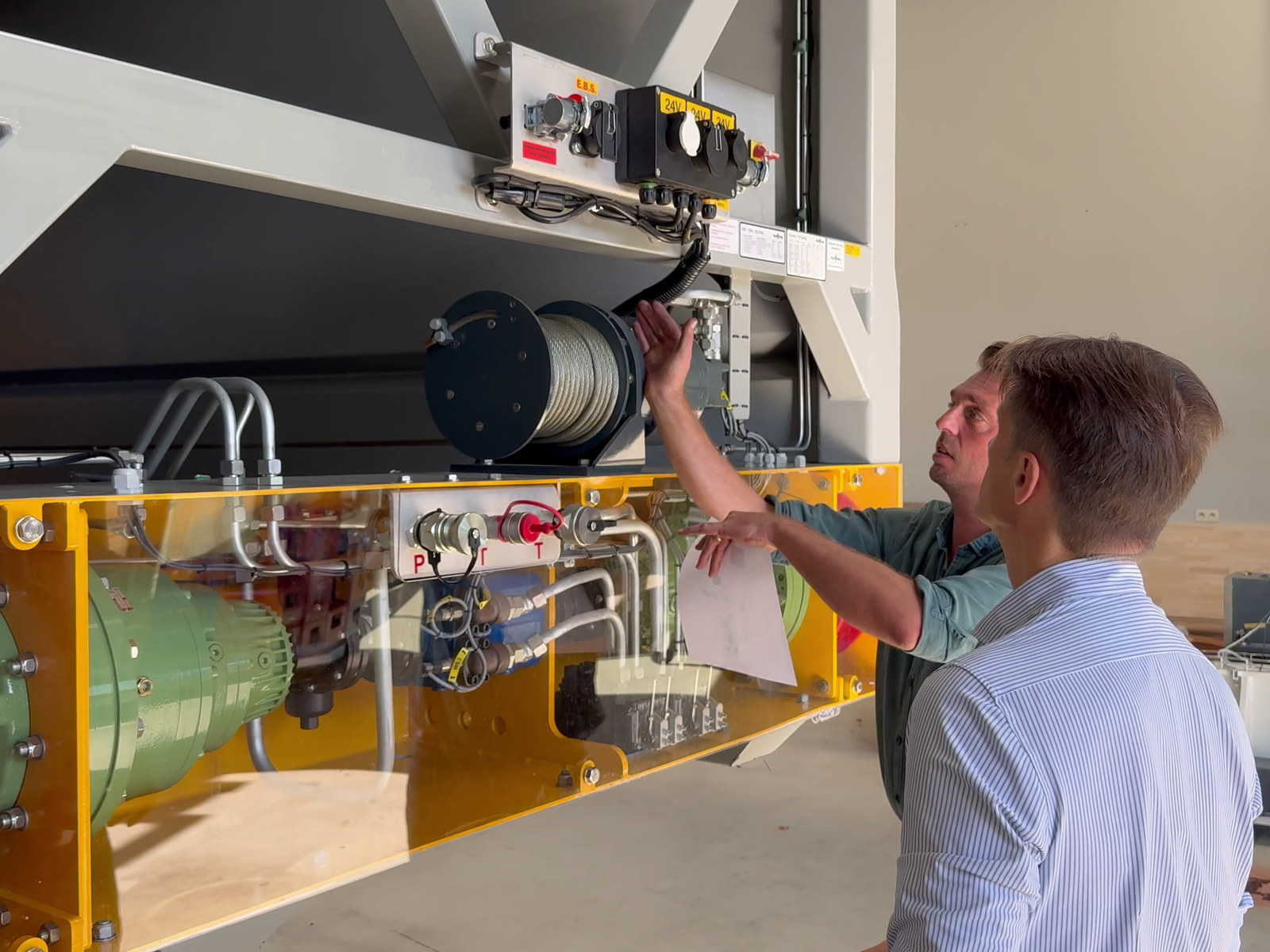
Delto PullHow do you unload a truck without ever tipping it?
Read This Success StoryPRODUCTION TECHNOLOGY
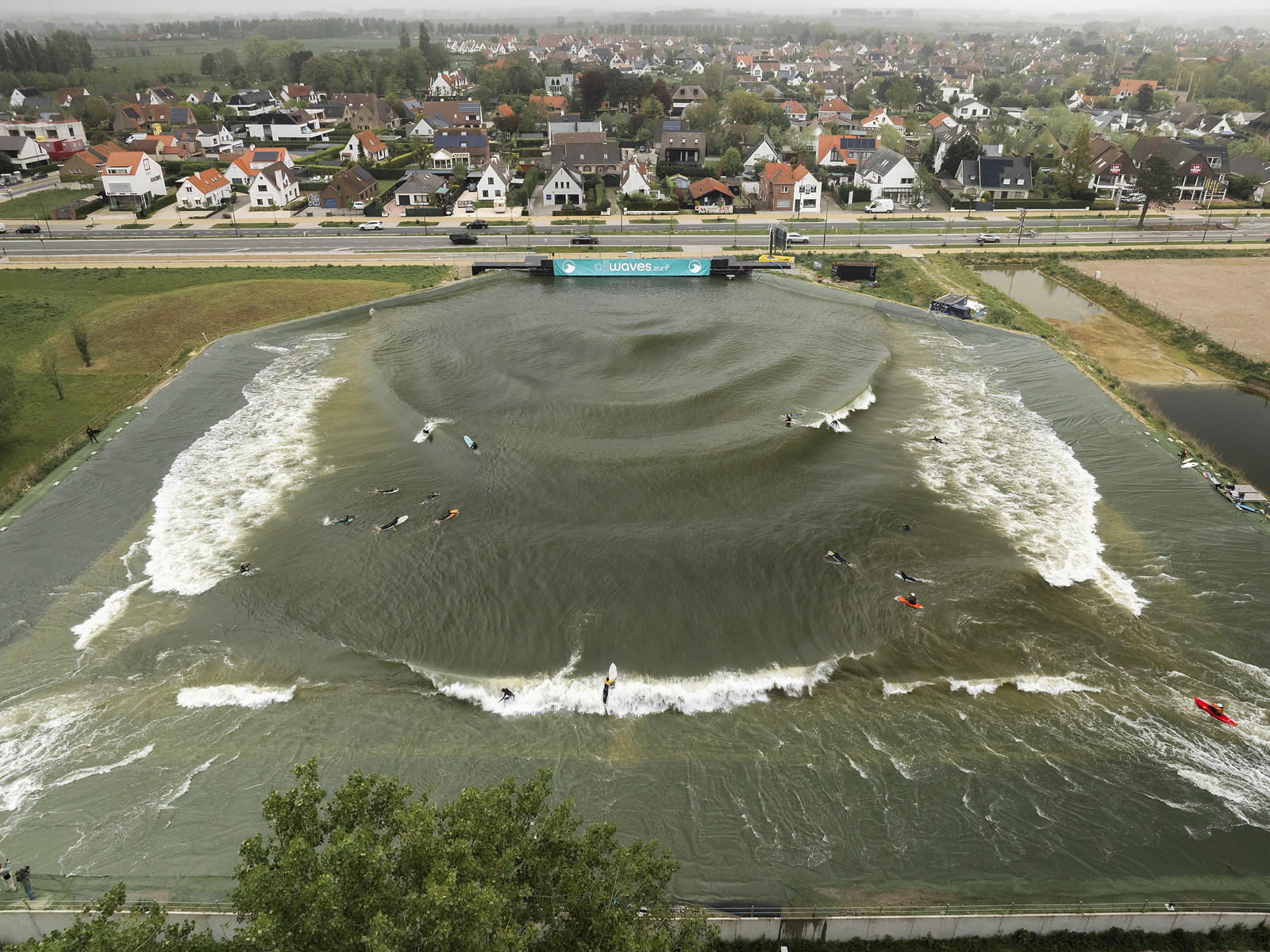
AllwavesManufacturer of wave pools A wave pool that creates ocean-quality surf waves
Read This Success StoryPRODUCTION TECHNOLOGY
Verlicht V-bordHow do you light up a real estate sign at night too?
Read This Success Story
FOOD AND BEVERAGE

Yummy BakeryIndustrial bakery Pancakes tailored to every season
Read This Success StoryPRODUCTION TECHNOLOGY

Benchmark TelecomTelecom solutions provider Retrofit of a telecom mast
Read This Success StoryPRODUCTION TECHNOLOGY

KU LeuvenThe Motor Control Playground: From Simulink to Real-Time PWM
Read This Success StoryPRODUCTION TECHNOLOGY

KU LeuvenThe Spindle Listener: Making spindle wear visible
Read This Success StoryPRODUCTION TECHNOLOGY

VIASBreath of Certainty: How simulation shaped the future of breath alcohol devices validation
Read This Success StoryAUTOMOTIVE

Off-Highway Tier 1Virtual Validation for Off-Road Transmission Systems
Read This Success StoryAUTOMOTIVE

Auto OEMHow Co-Simulation and Design Exploration Streamline Hybrid Control Development
Read This Success StoryPRODUCTION TECHNOLOGY

Warehouse Automation“How Simulation Drove the Battery Design and Charging Strategy for an AGV”
Read This Success StoryPRODUCTION TECHNOLOGY

Green Energy“Engineering the Wind: Simulating Smarter Small Turbines”
Read This Success StoryPRODUCTION TECHNOLOGY

GilbosManufacturer of textile machines Retrofit of the machine software
Read This Success StoryPRODUCTION TECHNOLOGY

ScaldopackBreaking Speed Limits: Smarter Software for High-Performance Filling
Read This Success StoryPRODUCTION TECHNOLOGY

H. EssersLogistics player Custom PCB for refrigerated containers
Read This Success StoryAUTOMOTIVE

KU Leuven LMSDPushing the Limits of Measurement Precision in Drivetrain Research
Read This Success StoryAUTOMOTIVE

Auto Tier1Test Anywhere: Simulation at the Heart of Mobile Testbench Design
Read This Success StoryFOOD AND BEVERAGE

Yummy Bakery Digitalization as recipe for tomorrow’s pancake
Read This Success Story
AUTOMOTIVE

KU Leuven LMSD & Toyota Motor EuropeResearch institution Test bench for powertrain components
Read This Success Story
AUTOMOTIVE

TRAXIALManufacturer of electric motors Automated test bench for their motors
Read This Success Story